Adolescent Hallux Valgus: Can It Be Corrected with Minimally Invasive Surgery?

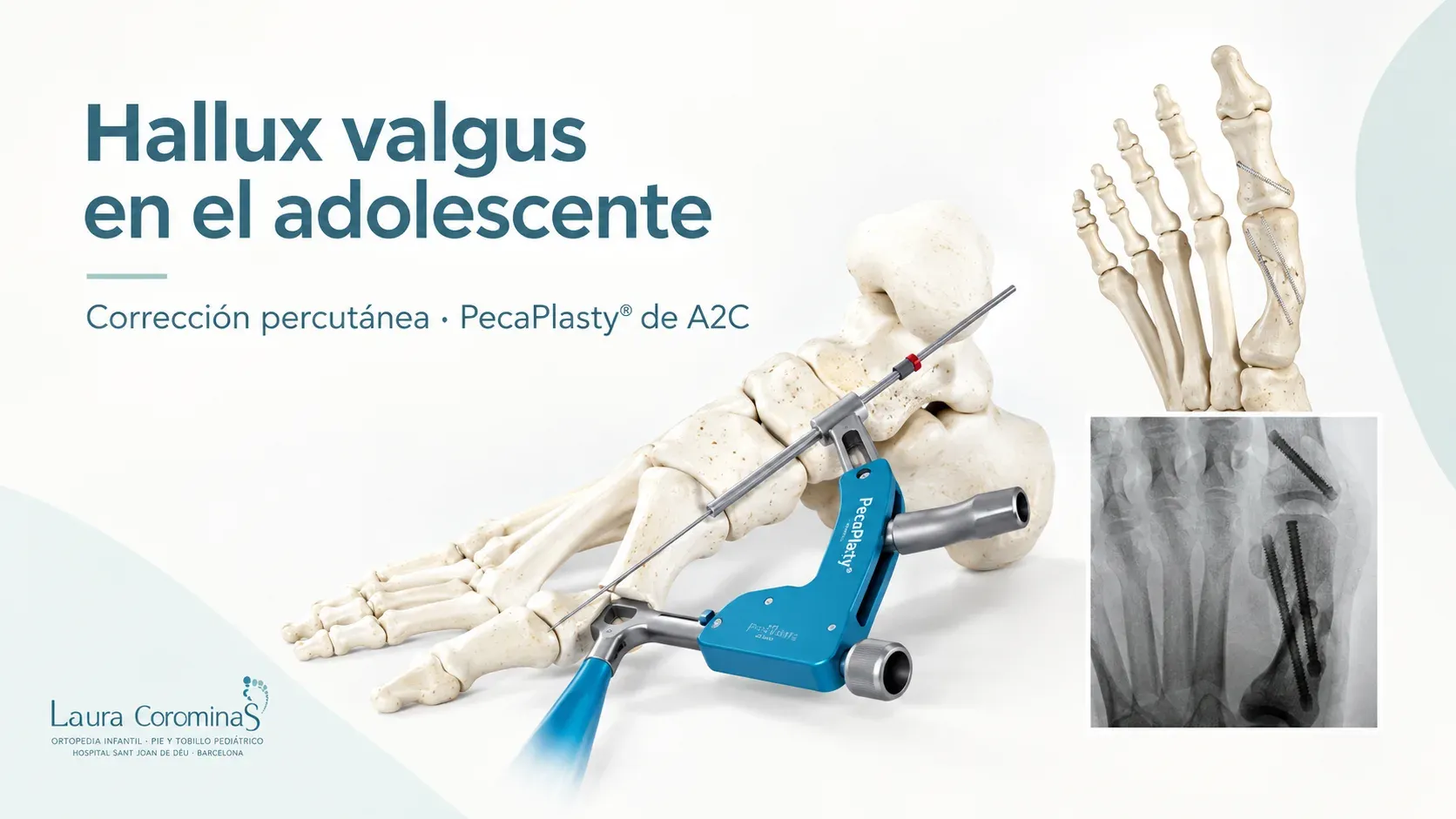
Hallux valgus, commonly known as a bunion, can also develop during adolescence. The deviation of the big toe can cause pain, difficulty finding comfortable footwear, and concerns about the progression of the deformity.
When conservative measures are no longer sufficient, surgery may be an option for selected patients. Minimally invasive percutaneous techniques currently allow certain deformities to be corrected through small incisions, with the aim of improving toe alignment and foot function.
What is juvenile hallux valgus?
Hallux valgus is a deformity in which the big toe deviates towards the lesser toes, while the first metatarsal deviates inwards. This can produce a bony prominence on the inner side of the foot, commonly known as a bunion.
In adolescents, there may be a family predisposition, and the condition is not caused solely by footwear. The deformity may progress during growth and cause pain, redness due to friction, or difficulties participating in sports.
When does it need treatment?
Not all juvenile bunions require surgery. If the deformity causes no pain or limitation in daily activities, observation and comfortable footwear with sufficient room for the toes are generally recommended.
When persistent pain, difficulty wearing shoes, or limitations in sports activities continue despite conservative treatment, surgical intervention may be considered.
The decision should be individualised, taking into account symptom severity, the extent of the deformity, and, particularly, the adolescent’s skeletal maturity.
What does percutaneous surgery involve?
Percutaneous surgery is performed through small skin incisions, through which osteotomies are carried out. These are controlled cuts in the bone that allow its position to be corrected.
In hallux valgus, these techniques can improve the alignment of the first metatarsal and, when necessary, correct the position of the big toe’s phalanx as well.
Potential advantages include smaller incisions and less disruption to the soft tissues. However, the procedure is not without risks and requires careful planning and experience with the technique.
There is no single surgical technique suitable for every patient. The choice depends on the severity of the deformity, radiographic measurements, and the individual anatomy of the foot.
Can surgery be performed during adolescence?
This is one of the most important aspects of treatment.
Before recommending corrective surgery, it is essential to assess whether the growth plates are still open or have nearly closed. Skeletal maturity influences both the choice of technique and the risk of recurrence.
In adolescents with remaining growth potential, certain growth-modulation techniques may help slow the progression of the deformity, although they do not immediately correct an established bunion.
Once sufficient skeletal maturity has been reached, a corrective osteotomy, including a percutaneous procedure, may be considered if the symptoms and deformity justify surgery.
What is recovery like?
Recovery depends on the technique used and the stability of the correction. After surgery, a specific postoperative shoe is usually worn for the period recommended by the surgical team.
Weight-bearing and the gradual return to activities are tailored to clinical progress and bone healing. Return to sport should take place when recovery allows, without rushing the process.
As with any surgery, complications may occur, including infection, stiffness, changes in sensation, problems with bone healing, or recurrence of the deformity.
This article is for general information and does not replace an assessment by a specialist.