Clubfoot in Newborns: What It Is and How It's Treated

Clubfoot in newborns: what it is and how it is treated.
Have you been told that your baby has clubfoot? The diagnosis can raise many questions and a lot of uncertainty, especially in the first days of life. The good news is that, with early diagnosis and proper treatment, most children can achieve functional feet and walk normally.
What is clubfoot?
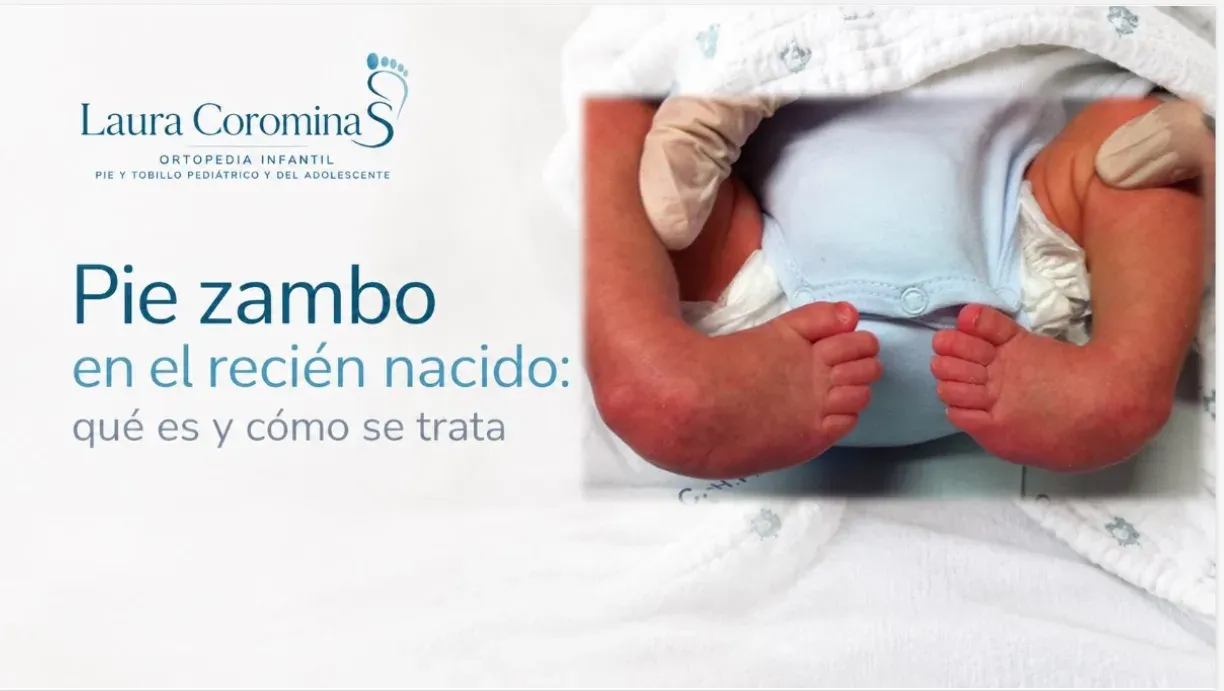
Clubfoot, also called congenital talipes equinovarus, is a deformity present from birth in which the foot is turned inwards and downwards.
It can affect one foot or both. It is not simply a matter of how the baby is positioned and, although in some cases it is associated with other conditions, it often appears on its own.
Important for families: it is not the parents’ fault, and it is not caused by the way the baby is held, by footwear or by posture during pregnancy.
How is clubfoot recognised?
Clubfoot involves a combination of changes:
-
The foot points downwards.
-
The heel is turned inwards.
-
The sole of the foot partly faces inwards.
-
The foot may look shorter and the calf somewhat thinner.
The deformity is usually obvious at birth and needs to be assessed by a paediatric orthopaedic specialist.
How is clubfoot treated?
The gold-standard treatment is the Ponseti method, a non-surgical technique that gradually corrects the deformity during the first weeks of life.
The treatment has several stages:
1. Serial casting
The foot is gently manipulated and casts are applied, usually changed every week. Each cast gradually corrects part of the deformity.
2. Achilles tendon tenotomy
In many babies, a small percutaneous release of the Achilles tendon is needed to correct the equinus component, that is, the downward position of the foot. It is a minor procedure, usually done under local anaesthesia and followed by one final cast.
3. Foot abduction brace
Once the foot has been corrected, a brace with two small boots joined by a bar is used. At first it is worn for most of the day and later during sleep hours, following the medical team’s instructions.
This stage is essential to maintain the correction and prevent the foot from becoming deformed again.
Can clubfoot come back?
Yes. Even if the foot has been corrected successfully, there is a risk of relapse, especially if the brace is not worn as instructed.
That is why follow-up throughout childhood is essential. If a loss of correction is detected, it may be necessary to repeat the casts or carry out other procedures.
When should we see a specialist?
If you notice that your baby’s foot has been turned inwards and downwards since birth, it is advisable to request an assessment by a paediatric orthopaedic specialist as soon as possible.
There is no need to wait until your child starts walking. Starting treatment in the first weeks of life makes correction easier.
The most important message
Clubfoot is a deformity that requires treatment and follow-up, but it does not stop most children from leading an active life and playing sport.
This article is for general information and does not replace an assessment by a specialist.