
My Child Is Toe Walking: Just a Phase or a Concern?

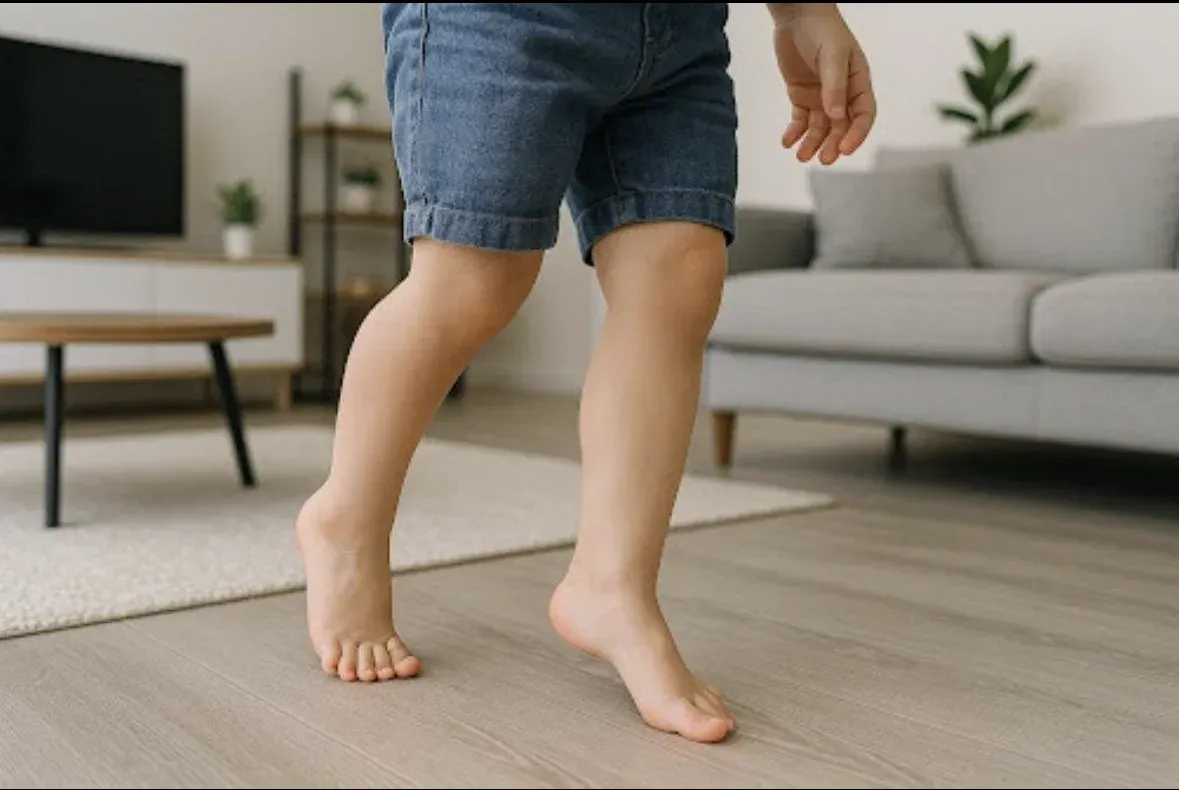
Toe walking in children: causes, warning signs and treatment
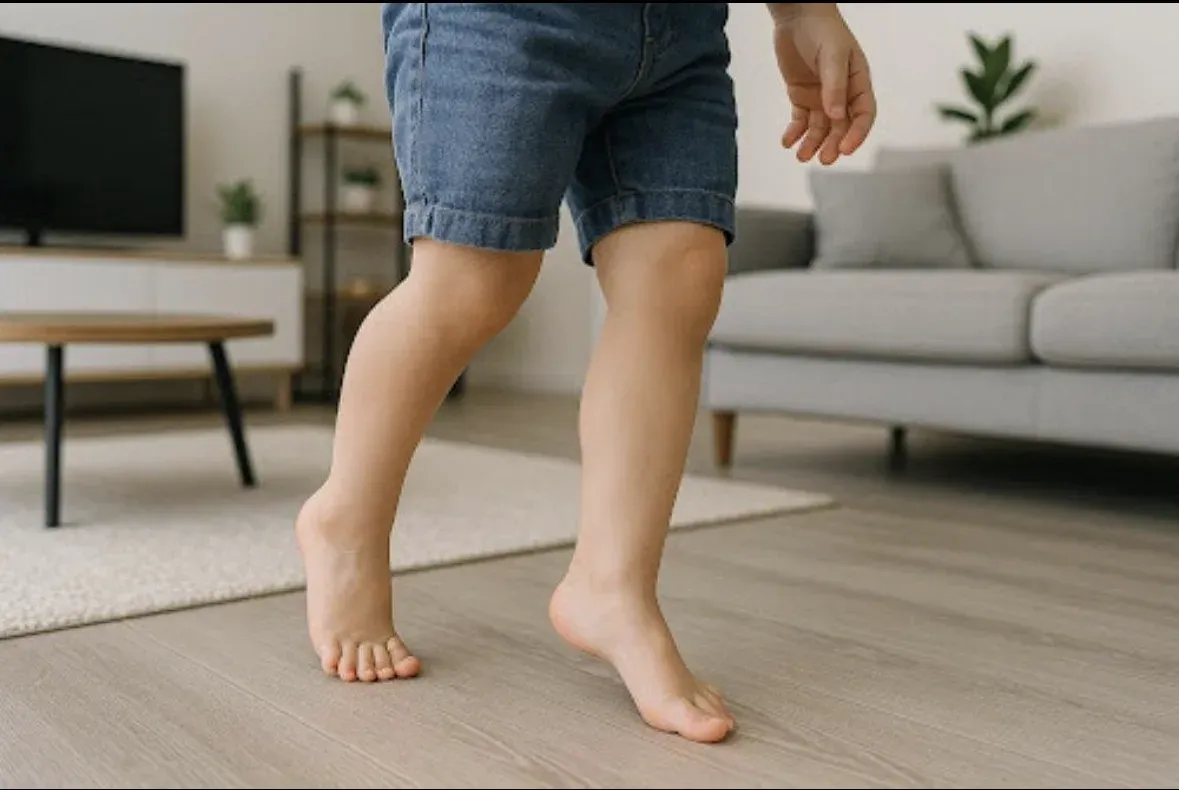
Toe walking is a walking pattern in which a child walks mainly on the front part of the feet, without the heel making the usual contact with the ground.
It is relatively common during the early stages of motor development, especially when children are learning to walk. However, when it persists beyond the first few years or appears together with other signs, it is important to have it assessed by a professional.
Is it normal for a child to walk on their toes?
While children are learning to walk, their foot placement can vary. Some children occasionally walk on their toes as part of exploring how they move.
In many cases, this behaviour disappears on its own as the walking pattern matures.
However, if your child is still regularly walking on their toes after the age of 2–3, it is a good idea to see a healthcare professional to identify the possible cause.
What causes toe walking?
Toe walking can have different origins:
-
Idiopathic toe walking: it occurs without any neurological, orthopaedic or muscular condition to explain it. It is usually bilateral (both feet).
-
Muscular causes: there may be shortening or increased stiffness of the calf muscles and the Achilles tendon.
-
Neurological causes: some conditions, such as cerebral palsy, can alter muscle tone and the walking pattern.
-
Neuromuscular causes: certain muscle diseases can affect the way a child walks.
-
Neurodevelopmental causes: toe walking can be seen in some children with autism spectrum disorder or other neurodevelopmental conditions.
-
Sensory factors: some children have differences in sensory processing that can influence how they place their feet.
It is important to remember that toe walking on its own does not mean that a child has autism or any other developmental condition.
What signs should we look out for?
Some features may indicate that an assessment is needed:
-
They walk on their toes all the time.
-
They cannot put their heels down when they try to.
-
They have difficulty squatting.
-
They fall often or seem unsteady.
-
There is stiffness in the ankles or limited movement.
-
They walk on their toes with only one foot.
-
They started walking on their toes after having previously developed a normal walking pattern.
Toe walking that appears suddenly deserves particular attention, especially if it comes with weakness, pain or changes in movement.
How is it assessed?
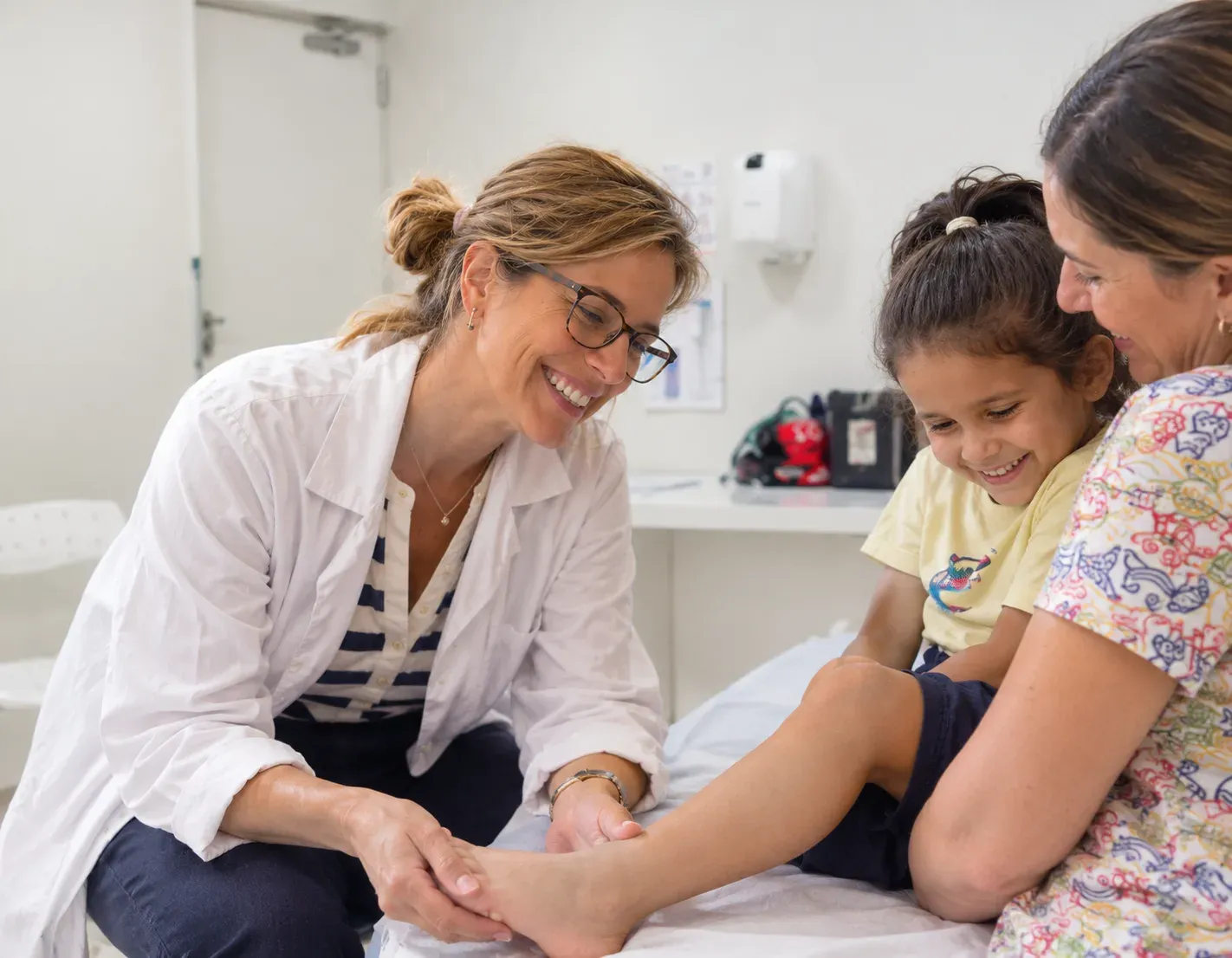
The assessment should be tailored to each child and may include:
-
Observing the walking pattern.
-
Assessing ankle range of motion.
-
Examining the muscles of the lower limbs.
-
Assessing muscle tone, strength and coordination.
-
Reviewing motor development milestones.
-
A neurological examination when indicated.
The aim is to determine whether it is idiopathic toe walking or whether there is a condition that needs specific attention.
How is toe walking treated?
Treatment will depend on the cause, the child’s age, how often they walk on their toes and whether or not there is any joint limitation.
Treatment options include:
-
Paediatric physiotherapy: exercises for mobility, strengthening, balance and retraining the walking pattern.
-
Stretching: when there is muscle shortening, it may be part of the treatment.
-
Orthoses: in certain cases, they can help encourage a more appropriate foot placement.
-
Serial casting: may be used when ankle dorsiflexion (the ability to bring the foot up towards the shin) is limited.
-
Surgery: reserved for selected cases with significant shortening where other measures have not been enough.
The importance of early intervention
Toe walking is not always a problem, but it should not be dismissed as normal when it persists or has atypical features.
An early assessment makes it possible to identify any underlying conditions, prevent muscle and joint limitations, and put in place a treatment plan adapted to each child’s needs.
Every child develops at their own pace, but watching how they walk can give us very valuable information about their motor development.
This article is for general information and does not replace an assessment by a specialist.